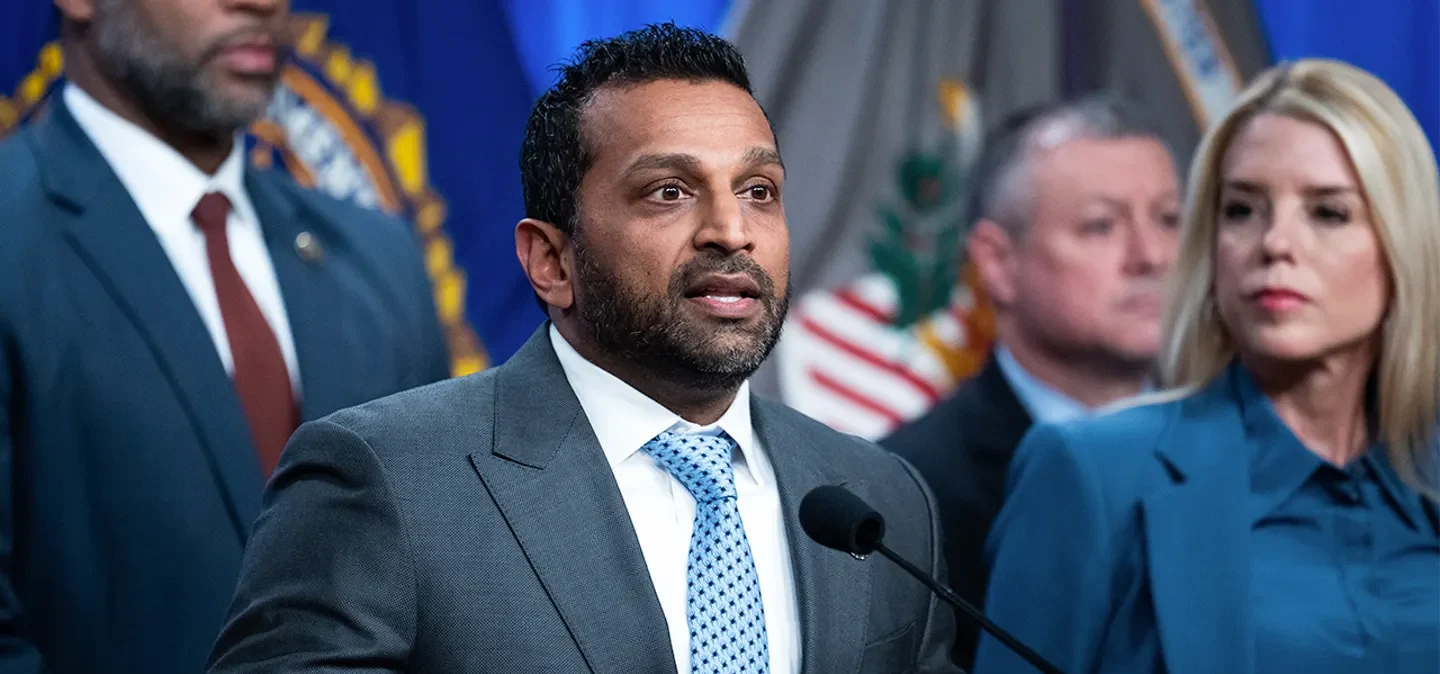
Oh, you’ve got to love it. Just when Washington insists the “Deep State” is nothing more than a bedtime story told to unruly conservatives, along comes another plot twist straight out of a political thriller. The FBI reportedly spying on Kash Patel and Susie Wiles while they were private citizens was already enough to make Americans raise an eyebrow. But now Department of Homeland Security Secretary Kristi Noem is saying, essentially, “Hold my coffee.” According to her, there were moles inside DHS installing spyware on government devices — including hers.
Let that sink in for a second. The agency tasked with protecting the homeland allegedly needed protection from its own internal operatives.
Noem dropped this revelation on the PBD Podcast, explaining that outside tech experts — including Elon Musk and members of his team — examined DHS-issued phones and laptops and flagged suspicious software activity. Musk. The guy who builds rockets and buys social media platforms before breakfast. Apparently, he’s now moonlighting as a Deep State exterminator.
And here’s where it gets really interesting. Noem says they didn’t just find questionable software. They discovered a secret SCIF — a Sensitive Compartmented Information Facility — tucked away on campus, complete with hidden files on controversial topics that, according to her, “nobody knew existed.” That’s not a misplaced stapler in a supply closet. That’s an entire secure room operating under the radar.
You can almost picture it: an employee walking by a nondescript door, wondering what’s behind it, only to uncover what sounds like the federal government’s version of a secret clubhouse. Files. Personnel. Operations that allegedly weren’t properly disclosed to leadership. If that’s accurate, it raises a fundamental question: who exactly is running the show?
For years, Republicans have argued that there are entrenched bureaucrats who outlast administrations and quietly work to undermine policies they don’t like. Critics roll their eyes and mutter about conspiracy theories. But every time a story like this surfaces, it becomes a little harder to dismiss the concern outright. Surveillance software on political appointees’ devices? Secret secure rooms? Hidden files? That’s not exactly the stuff of transparent governance.
Noem isn’t stopping at discovery. Earlier this month, she announced that DHS would begin using lie detector tests to identify employees leaking information about ICE raids. Predictably, the usual suspects clutched their pearls. But consider the alternative: if operational details about immigration enforcement are being leaked, potentially putting officers at risk and sabotaging federal law enforcement efforts, is leadership supposed to just shrug and hope for the best?
President Trump learned during his first term that campaign promises are one thing; navigating the federal bureaucracy is another. The machinery of government is vast, layered, and filled with career officials who don’t simply vanish when voters choose a new direction. If Noem’s allegations hold up, it suggests that some of those internal battles never ended — they just went underground.
And yes, not everyone in Trumpworld is a Noem fan. Her critics mock her with nicknames and circulate rumors about her political future. That’s politics. But strip away the personality politics for a moment, and focus on the substance of the claims. If government employees secretly installed surveillance tools on political leadership, that’s not office gossip — that’s potentially criminal behavior.
The irony here is rich. For years, Americans were told that concerns about internal sabotage were paranoia. Meanwhile, we now have allegations of spyware, secret facilities, and hidden files being turned over to attorneys for investigation. That doesn’t sound like a routine IT audit. That sounds like a housecleaning.
Of course, investigations will need to confirm the details. Allegations are not convictions. But if even a fraction of this proves accurate, it reinforces a broader point many conservatives have been making: accountability inside federal agencies cannot be optional. Transparency cannot be selective. And loyalty to the Constitution — not to internal factions or ideological agendas — is supposed to be the standard.
Noem says DHS is returning to a “standard of excellence and behavior” under Trump’s leadership. That’s the goal. Whether it succeeds depends on what these investigations uncover and whether consequences follow. Because if there truly are bureaucrats operating in the shadows, monitoring communications and stockpiling undisclosed files, the American people deserve more than reassurances.
They deserve answers. And maybe, just maybe, a few fewer secret doors in buildings funded by their tax dollars.